
Last updated October 17, 2026
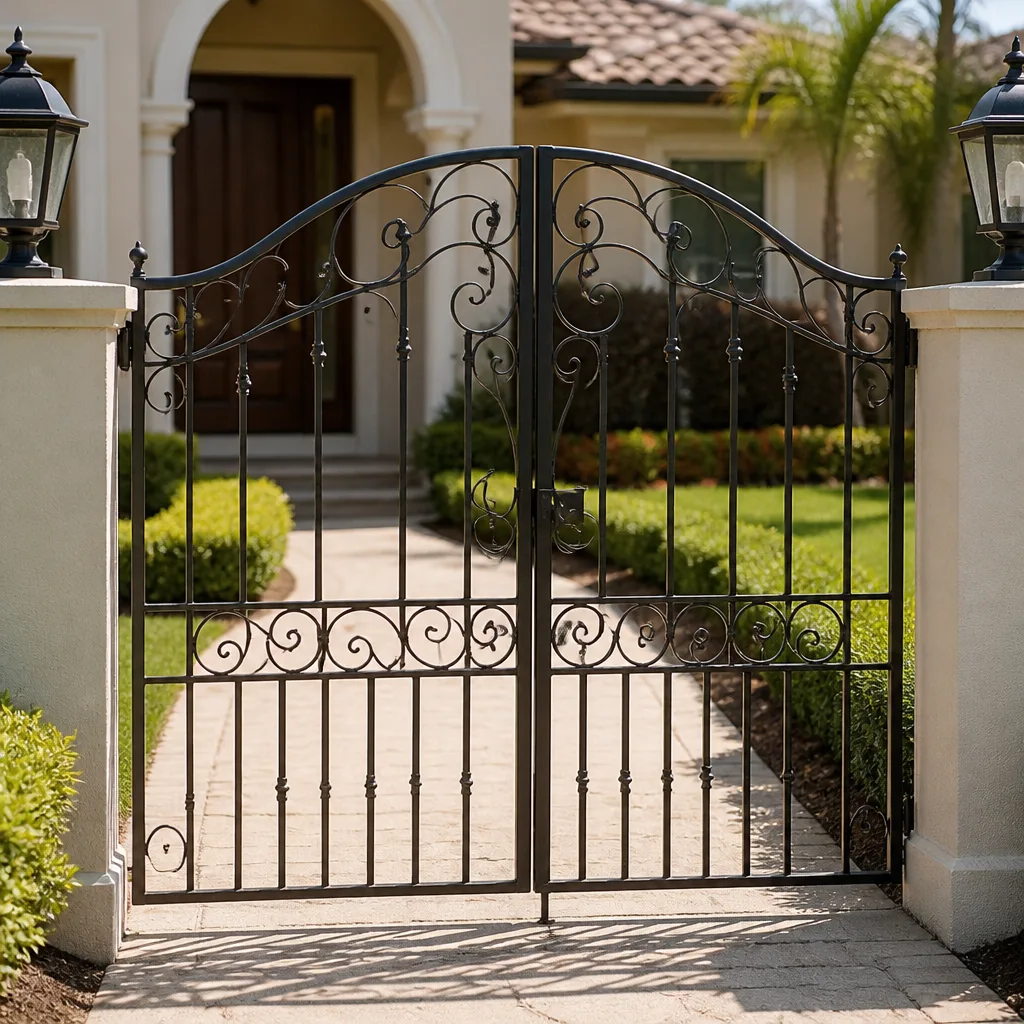 Wrought iron
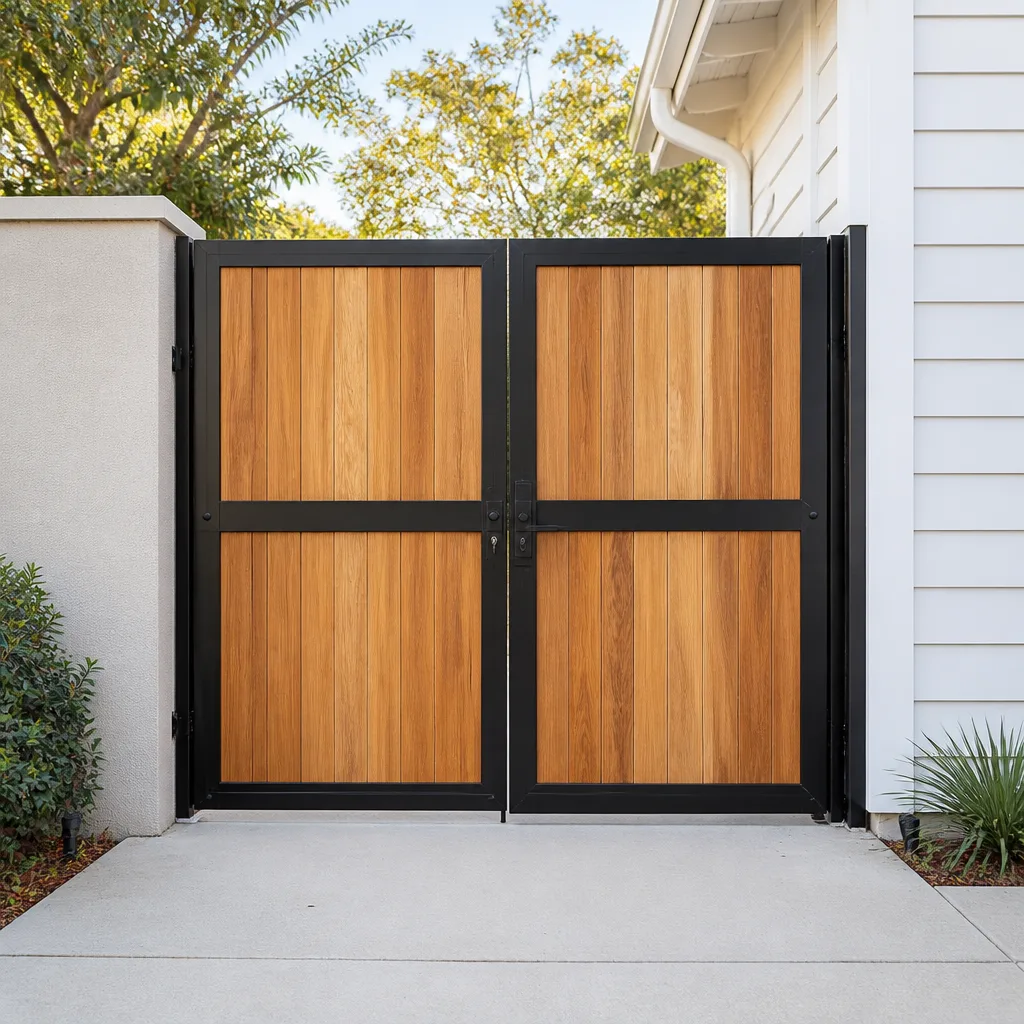 Wood & steel frame
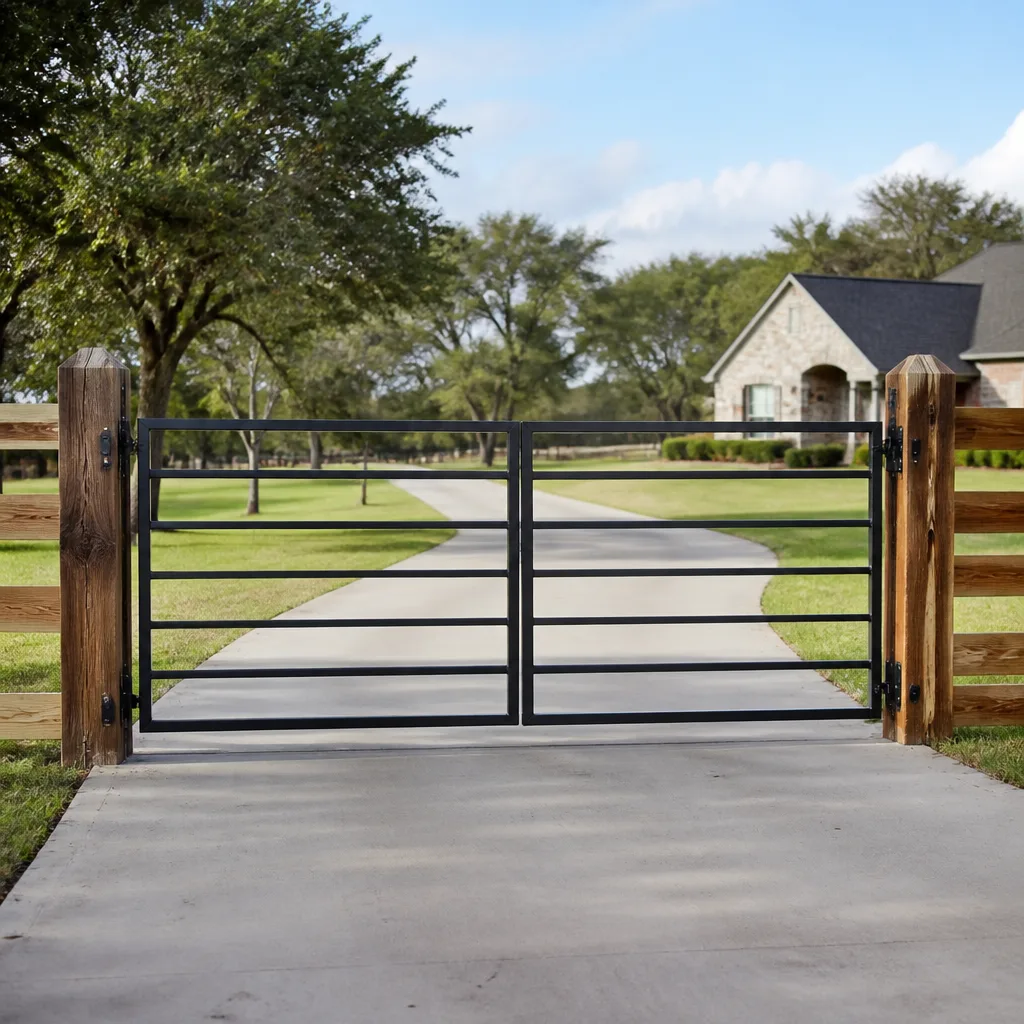 Farm & ranch
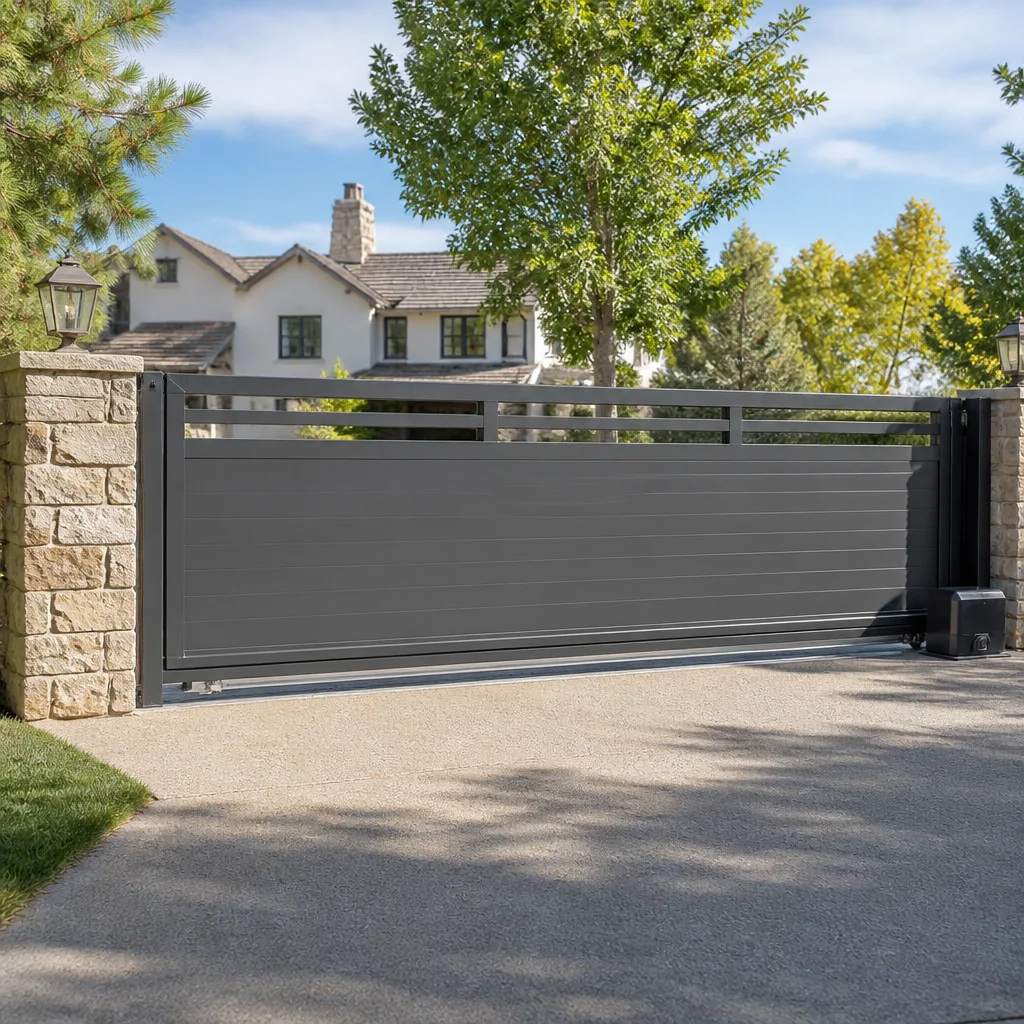 Sliding driveway gates
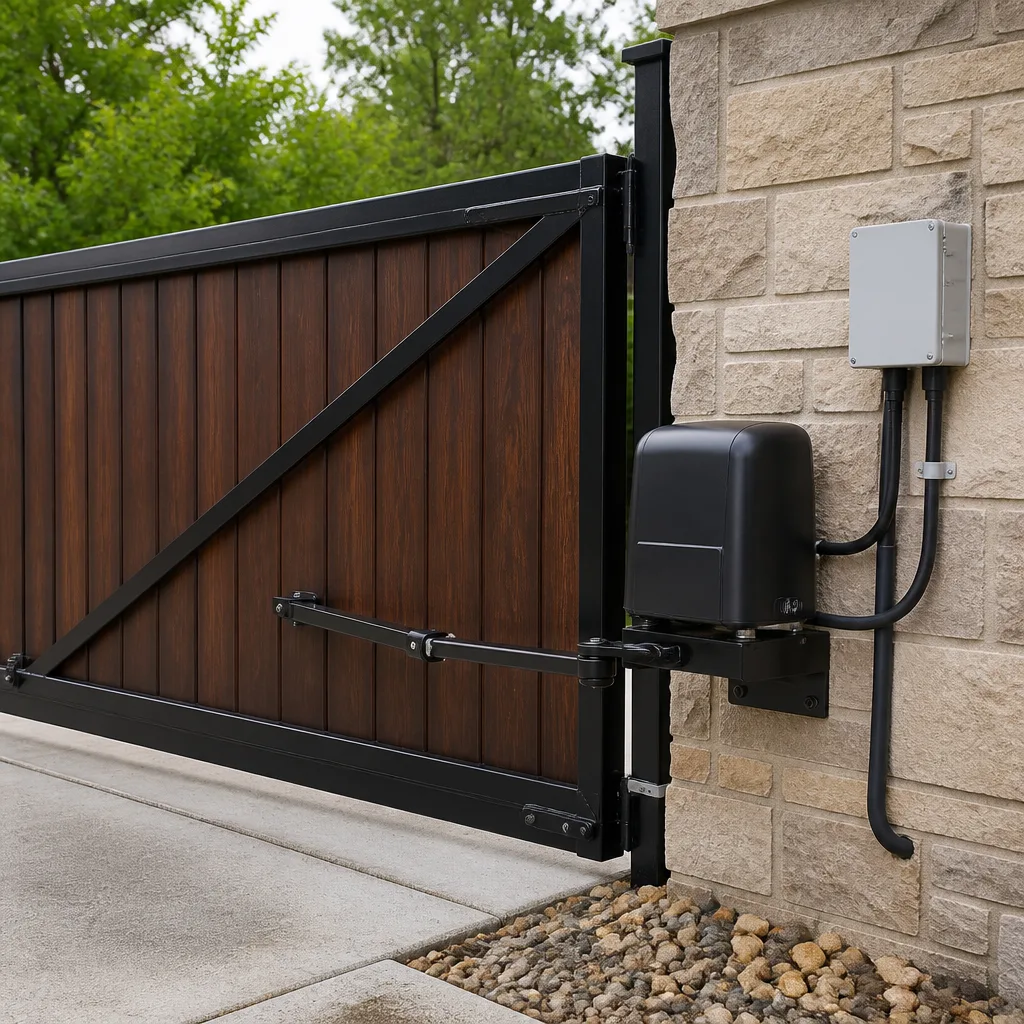 LiftMaster operators
Free on-site gate assessment - hinges, posts, and your LiftMaster or Nice gate operator checked before anything is quoted
The assessment is free and the quote is the invoice.
Get your free estimateDIY vs Professional Gate Repair: The West Palm Beach Homeowner’s Decision Guide
The gate at the side of your West Palm Beach home does quiet work until it doesn’t. One week it swings fine, the next it drags across the pavers or refuses to latch. The hook in this guide isn’t that DIY repair is dangerous. It’s that the decision between doing it yourself and calling a technician depends entirely on which repair you’re facing. A sticking latch is often a fifteen-minute fix with a screwdriver. A leaning post in sandy, water-saturated soil is a different animal entirely. We’ve watched competent homeowners re-level a post in West Palm Beach, step back satisfied, and call us six months later after the first heavy rain undid everything. This guide draws the line repair by repair, with real costs and the honest math on what a failed DIY attempt actually runs.
Styles & brands we work with
Quick Answer
For most West Palm Beach homeowners, latch adjustment, hinge lubrication, and strike plate realignment are genuinely reasonable DIY tasks with basic tools. Hinge replacement, post anchor work, and any electric gate operator service cross into territory where professional repair is cheaper in the long run. The difference comes down to whether the repair requires surface adjustment or structural and electrical work.
Table of Contents
- The Repair-by-Repair Decision Table
- The True Cost of a Failed DIY Gate Repair
- Legitimate DIY Gate Tasks: Tools, Materials, and Torque Values
- Why West Palm Beach Soil Changes the Post Repair Math
- Electric Gate Repair and the Warranty Question
- Using a Diagnostic Visit as a Decision Tool
- Common Mistakes to Avoid
- When to Call a Professional
- Frequently Asked Questions
- The Bottom Line
The Repair-by-Repair Decision Table
The cleanest way to answer the DIY-versus-professional question is to sort repairs into three groups: green for genuine homeowner tasks, yellow for borderline depending on tools and patience, and red for work that carries real risk of making the problem worse. Here is how we divide the common gate repairs we see across West Palm Beach, from El Cid to the acreages out by Wellington.
Green: Genuine DIY Tasks
- Latch adjustment or latch replacement. A standard gravity latch or spring latch installs with a drill, a 3/16-inch bit, and about twenty minutes. Most surface-mount latches cost between $15 and $45 at any hardware store in West Palm Beach. The failure mode is visible: screws pull loose, the bar no longer aligns with the strike plate, or the spring inside the latch body fatigues.
- Strike plate realignment. When a wooden gate swells in South Florida humidity, the latch bar sits a quarter inch higher or lower than the strike plate hole. Filing the plate opening or adding a thin shim behind the plate solves it. No parts cost if you already have a file and a screwdriver.
- Hinge lubrication. A can of white lithium or silicone spray costs $8 to $14 and takes five minutes. This is maintenance, not repair, and it should happen every three to four months in West Palm Beach’s salt air.
- Roller replacement on a sliding gate. Many sliding gate rollers are bolted into a track and can be swapped with a socket set. Rollers run $25 to $60 each depending on weight rating.
Yellow: Borderline Tasks
- Full hinge replacement on a heavy gate. Replacing one hinge on a lightweight aluminum pedestrian gate is doable. Replacing a pair of barrel hinges on a 150-pound wooden driveway gate is a two-person job with a risk of the gate dropping mid-repair. If you have a second set of hands and a floor jack, possible. If not, the gate can twist the remaining hinge and bend it.
- Chain-link tension adjustment. Tightening a sagging chain-link gate fabric requires a come-along and a tension bar. It is not difficult, but the tools are rarely in a standard homeowner’s garage.
Red: Professional Territory
- Post anchor reset or replacement. This is the one that looks deceptively simple. See the section on West Palm Beach soil below for the full explanation, but the short version is that a post that shifts once will shift again unless the footing is restored correctly.
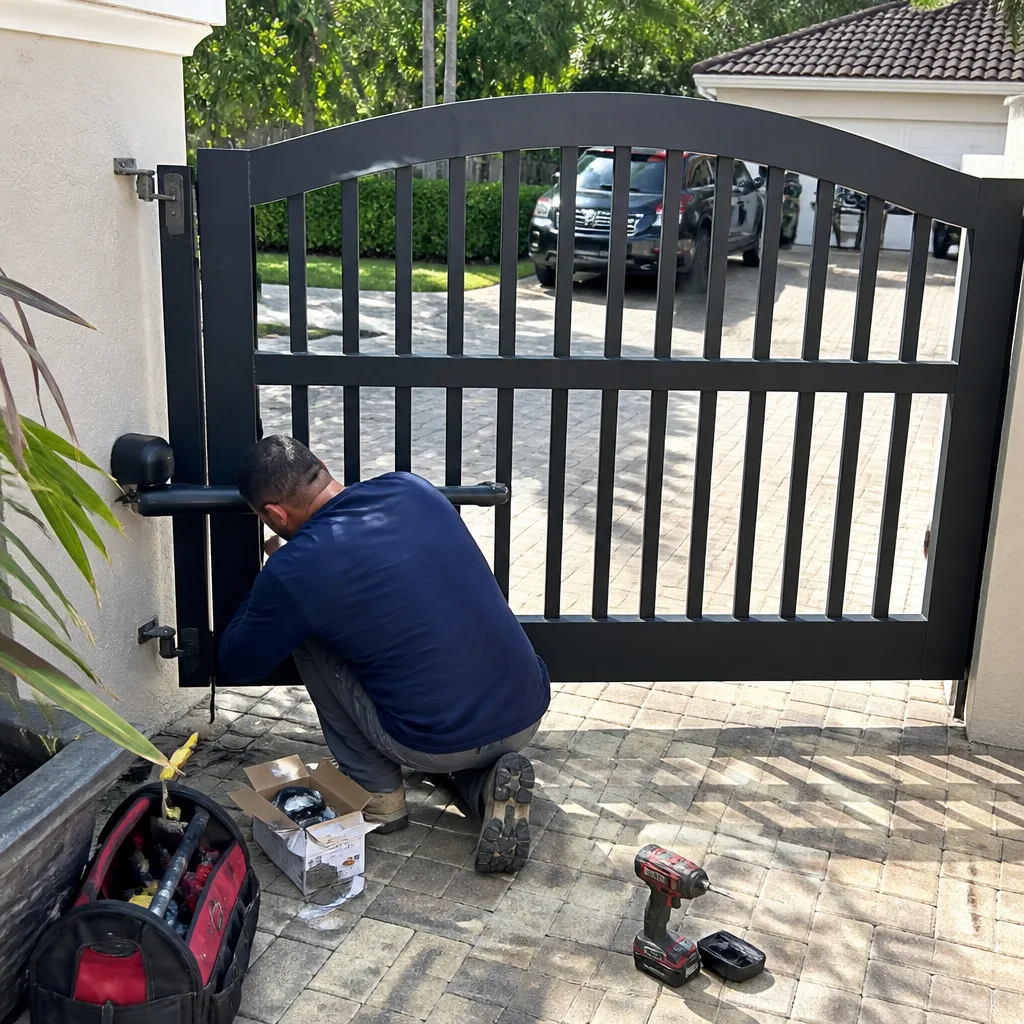
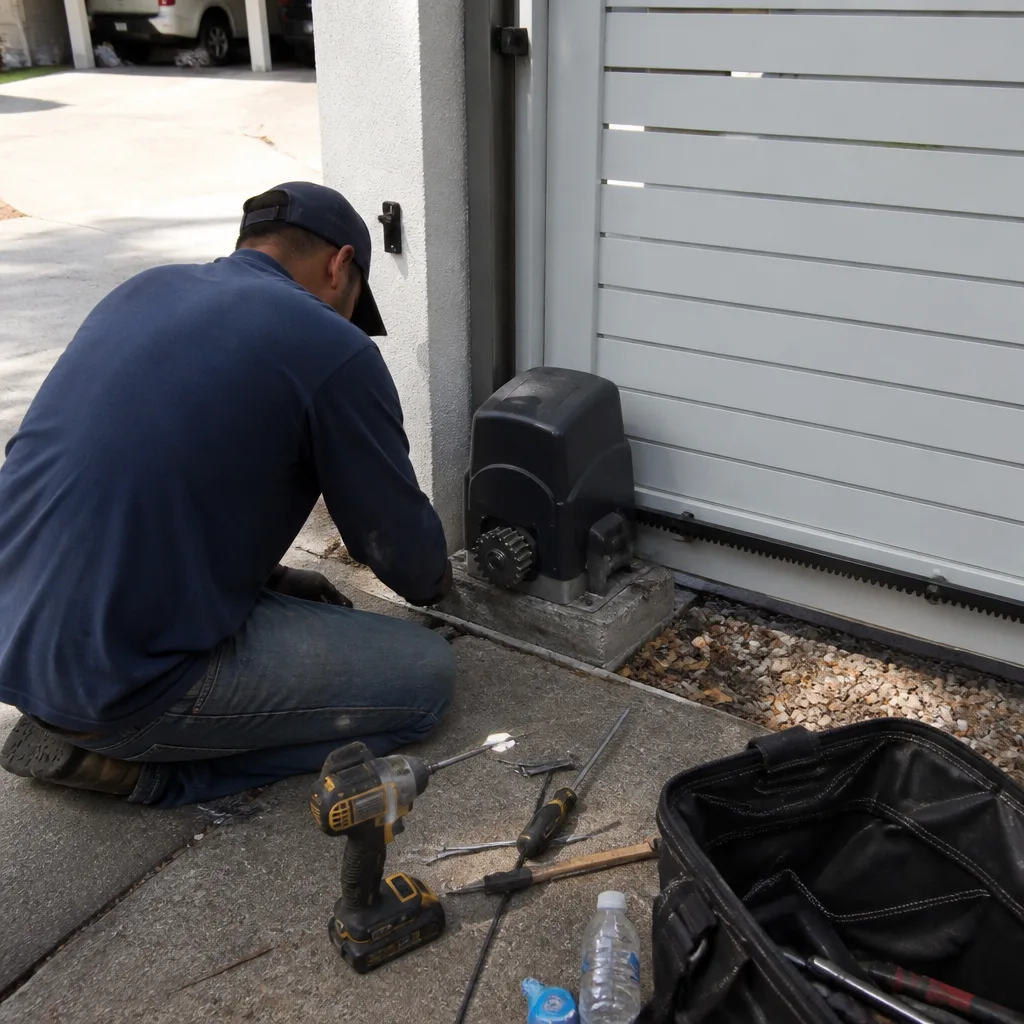
- Any electric operator repair. Wiring, capacitor replacement, limit switch adjustment, and control board diagnostics all fall here. The risk is not just shock. It’s the fact that a mis-wired operator can work intermittently for weeks before it fails hard, usually at the worst time.
- Underground conduit or power feed work. Anything involving digging down to the power line or repairing a break in the conductor is licensed-electrician territory, and your gate technician should coordinate with that electrician. We do this regularly for electric gate repair in West Palm Beach when the operator has power but fails under load.
We built our business around the two parts of a gate that cause most failures: the latch that holds it and the post that carries it. That focus is why we’re named Latch and Post. And it’s why we’re comfortable telling homeowners which of those two parts they can fix themselves and which one they should not touch without the right equipment.
The True Cost of a Failed DIY Gate Repair
Most cost comparisons of DIY versus professional repair only count the parts. They leave out the cost of undoing a failed attempt, plus the parts damaged during the attempt. Here are three common West Palm Beach repairs, with the real numbers both ways.
Repair 1: The Leaning Post Reset
Professional-first cost: $250 to $550 for a standard single post anchor reset, depending on whether the post needs partial concrete removal or a full re-pour.
DIY parts cost: $40 to $90 for a bag of fast-setting concrete, gravel, and a post level.
What goes wrong: The homeowner digs out around the existing footing, adds new concrete at the surface, and re-levels. The post stands straight. What the homeowner cannot see is that the original footing has detached from the compacted soil underneath. In West Palm Beach, with a water table measured in feet, not yards, the first heavy rain re-liquefies the disturbed soil around the old footing, and the post leans again within one wet season, often worse than before because the new concrete collar is now levering against the old footing.
Cost to undo and redo professionally: $350 to $700, because the technician now has to break out the DIY concrete collar, inspect the original footing, possibly extend it below grade, and re-compact the surrounding soil before the new pour.
Net result: The homeowner spent $40 to $90 on parts, then $350 to $700 on the correction. Total: $390 to $790, which is at least $140 more than the high end of the professional-first price, with several months of frustration in between.
Repair 2: Electric Operator Not Responding
Professional-first cost: $180 to $340 for a typical diagnostic and repair, which usually means replacing a limit switch, a capacitor, or a small control board component on a Linear or Viking operator.
DIY parts cost: $60 to $120 for a new capacitor or limit switch from an online supplier.
What goes wrong: The homeowner replaces the part but does not set the limit switch travel correctly. The gate now opens too far or not far enough. On a Viking operator, an improperly set limit can burn out the new capacitor within weeks. Worse, some operators store the limit settings on the control board, so blindly swapping the board wipes the programming and the gate will not respond at all.
Cost to undo and redo professionally: $250 to $450, because the technician now has to diagnose whether the new part is damaged, re-set the limits, and in some cases re-flash the board.
Net result: $310 to $570 total, plus the gate was out of service longer than if the technician had come first.
Repair 3: Hinge Replacement on a Heavy Wooden Gate
Professional-first cost: $180 to $280 for a pair of heavy-duty hinges, properly shimmed and aligned.
DIY parts cost: $50 to $90 for the hinges.
What goes wrong: The homeowner removes the bottom hinge first, and the gate drops. The top hinge bends. Now the gate sits an inch lower than it should, dragging on the pavers. The technician arrives to find both new hinges need replacement because the top one is bent and the bottom one was installed with the gate under load, so its barrel is already worn off-center.
Cost to undo and redo professionally: $220 to $300.
Net result: $270 to $390, and the gate may have scraped a groove into the paver path that the concrete fix will not cover.
The pattern across all three is the same: the parts cost less, and the failure costs more. That’s the math we think West Palm Beach homeowners actually need, not the usual “$20 at Home Depot versus $200 for a pro” comparison that pretends both attempts are equal.
Legitimate DIY Gate Tasks: Tools, Materials, and Torque Values
For the tasks on the green list, you want the right gear for South Florida. Coastal air is humid and salty, which means lubricants and fasteners that would be fine in a dry climate corrode faster here. Here is what we recommend when a homeowner calls us and asks what they can handle themselves.
Step-by-Step: Adjusting a Sticking Gate Latch in West Palm Beach
- Identify the latch type. Gravity latches are the flat bars that fall into a strike plate. Spring latches are the ones with a visible spring and a thumb lever. Both adjust the same way; the spring version just has more failure points.
- Check the alignment first. Close the gate slowly and watch where the latch bar meets the strike plate. If it’s off by more than a quarter inch, fix the alignment before touching the latch body. On a wooden gate, this often means sanding or planing the sagging edge, not moving the latch.
- Tighten the hinge screws. Most gate drag and latch misalignment traces back to loose hinge screws. Use a manual screwdriver, not an impact driver, and set them to snug plus a quarter turn. On a wooden gate post in West Palm Beach’s humidity, over-torquing screws strips the wood fiber and makes the problem permanent.
- Lubricate the hinge barrels and latch mechanism. Use white lithium grease on metal hinge barrels and a dry silicone spray on the latch internals. In the salt air off the Intracoastal, WD-40 is a temporary fix at best. It washes out in the first rain.
- Test the swing. The gate should move through its full arc without any drag. If it still binds, the post may be shifting, and that moves you into the red category.
Tools Worth Owning
- A manual screwdriver set with Torx and square-drive bits. Gate hardware in Florida uses a mix of Phillips, square, and Torx. An impact driver will over-drive them in soft treated lumber.
- A 3/16-inch and 1/4-inch cobalt drill bit. Stainless and galvanized gate hardware is harder than the bits most people have in a kitchen drawer kit.
- A post level. A standard spirit level is too short to register post lean accurately. A post level with two vials and a magnetic face runs $15 to $25.
- White lithium grease and dry silicone spray. Two different lubricants for two different jobs. Grease for load-bearing metal, silicone for latch internals and rollers.
Torque Values That Matter
For hinge bolts on a typical pedestrian gate, 15 to 20 foot-pounds is the practical range. For a driveway gate hinge, 30 to 40 foot-pounds. Past that in Southern yellow pine or cedar posts, the wood compresses and the screw loses its grip. In West Palm Beach’s wet-dry cycle, a stripped screw hole in a post becomes a rot point within a year. That is not a rule you’ll find on the bolt package. It’s what we’ve learned from replacing posts that failed this exact way.
If any of this feels like more than you want to take on, our team at Latch and Post Gate Repair in West Palm Beach handles latch work every day. But for the homeowner who wants to handle the green-list items themselves, the information above is the same advice we give on the phone.
Why West Palm Beach Soil Changes the Post Repair Math
West Palm Beach sits on a mix of sand, shell, and organic fill over limestone. The water table in many neighborhoods, especially east of I-95 and along the Intracoastal, sits shallow enough that a post hole dug three feet deep fills with water before the concrete is mixed. This is not a detail. It’s the variable that determines whether a post stays put or leans again.
A gate post in dry, compacted clay works like a lever set in hard ground. The footing only has to resist the pivoting force of the gate. A gate post in saturated sand works like a lever set in a bucket of wet sugar. The footing has to be wider, deeper, and properly bonded to the surrounding soil, or the whole assembly rotates under load. When a post fails in West Palm Beach, it usually is not because the concrete cracked. It’s because the soil around the footing lost compaction, the footing shifted, and the post moved with it.
Here is what a proper post anchor reset involves in this soil:
- Expose the original footing. Dig down around the existing concrete until the full footprint is visible. In West Palm Beach, this means dealing with water intrusion in the hole almost immediately.
- Inspect the footing base. If the original footing was poured narrow at the bottom or resting on disturbed fill, the repair has to extend below the original grade. A surface collar will not fix a base that has lost its purchase.
- Re-compact the bearing soil. Backfill in lifts of four to six inches, tamping each lift before adding the next. Shoveling loose sand back in and pouring concrete on top is the number one reason posts re-lean after a DIY repair.
- Pour a footing wider than the original. Common practice for a standard 4×4 or 6×6 gate post in sandy soil is a footing at least 10 to 12 inches in diameter, extending 30 to 36 inches deep below grade.
- Brace the post until the concrete reaches working strength. Fast-setting concrete seems convenient, but it generates less ultimate strength than standard-mix in saturated conditions. In West Palm Beach, the better approach is often standard-mix concrete with a longer brace time.
The reason this crosses into professional territory is not that a homeowner cannot follow these steps. It’s that the failure mode is invisible at the surface. The post stands straight after a DIY repair because the new surface concrete has temporarily locked it in place. The compaction problem underneath is hidden until the wet season arrives and the post shifts again, usually taking the gate out of alignment and stressing the hinges in the process.
We see this pattern constantly in neighborhoods like Belvedere Homes, South End, and throughout the coastal sections of West Palm Beach. It’s one of the most common calls we get as part of gate installation in West Palm Beach when a homeowner has decided the only real fix is to start fresh.
Electric Gate Repair and the Warranty Question
Electric gate operators are the clearest line in this guide. If your LiftMaster, FAAC, BFT, Linear, or Viking operator has stopped working, is running intermittently, or reverses mid-travel, do not open the control box and start swapping parts. The reason is not just safety, though electrical safety is real. The reason is warranty and reversibility.
Most operator manufacturers write warranty terms that exclude damage caused by unauthorized repair. That phrasing is specific. If a homeowner replaces a capacitor with the wrong microfarad rating and the motor burns out three months later, the warranty claim is typically denied, even if the motor failure was unrelated. We’ve seen this with LiftMaster and Viking units specifically. The manufacturer’s local service network can see the repair history, and an unauthorized part swap is a fast path to a voided claim. A professional electric gate repair in West Palm Beach uses correct-spec parts and maintains the operator’s service record, which protects the remaining warranty.
There is also a diagnostic problem. Electric gate failures are notoriously intermittent. A capacitor fails under load at 2:00 p.m. on a hot day but bench-tests fine at 9:00 a.m. A control board fault resets when the breaker cycles, then returns a week later. The homeowner who swaps a part and sees the gate work again has not necessarily fixed anything. They’ve reset a failure that will return. A technician who sees this every week recognizes the pattern and tests under the conditions that actually trigger the fault.
When a gate operator has power but behaves erratically, the safe move for any West Palm Beach homeowner is to kill power at the breaker and call a technician. A diagnostic visit runs $75 to $100 in most cases, and it gets you an answer, not a guess. The cost of the diagnostic is often credited toward the repair if you proceed, which at Latch and Post is standard practice on most visits.
Using a Diagnostic Visit as a Decision Tool
Here is a tactic most homeowners do not know they have: you can call a professional for a diagnostic visit without committing to a repair, and the visit itself gives you the information you need to make the DIY-versus-professional call yourself. A Latch and Post diagnostic visit runs between $75 and $100 in West Palm Beach, and our technician will walk you through what’s actually wrong, what has to happen to fix it, and whether any part of the fix is reasonable for you to handle on your own.
What our technician tells you during a diagnostic visit:
- The specific failed component, by name. Not “your opener is broken.” It’s “the limit switch on the FAAC board is not registering closed position.” That specificity lets you shop the part online and compare.
- Whether the failure is mechanical, electrical, or structural. A gate that drags could be a hinge, a post, or an operator. The diagnostic isolates it.
- The realistic timeline. If the repair requires parts that ship from a distributor in Fort Lauderdale or Miami, you know that before you decide. A DIY attempt does not save you the wait if you order the wrong part twice.
- The honest DIY assessment. Our technicians are trained to say “you can do this yourself with a screwdriver and a $20 latch” when that’s true. It’s part of how we operate under the Cedarwell C.A.R.E. values: explain the price before the work, and be straight about what the work actually is.
- A written price for the professional repair. No obligation, no pressure. You get the number in writing before any work starts. If you decide to tackle it yourself, you have a hard ceiling to compare against.
This changes the decision from a theoretical one to a specific one. You are no longer asking “should I fix my gate myself?” You are asking “this FAAC operator has a bad limit switch, the part is $85 online, and the professional repair is $220. Do I take the risk?” That is a question a homeowner can answer clearly.
Common Mistakes to Avoid
- Treating a leaning post as an alignment problem. When the post shifts, the gate goes out of alignment at the latch. Fixing the latch or shimming the hinges treats the symptom. The post will continue to move, and you will re-fix the same alignment every few months until the post fails outright.
- Using WD-40 on gate hinges in West Palm Beach. It is a solvent, not a lubricant. It strips the grease out of the hinge barrel and washes away in the first rain off the coast. Use white lithium grease.
- Over-tightening screws into humid, softened wood. Treated Southern yellow pine absorbs moisture in the Florida wet season and dries out in the winter. An over-driven screw strips the fiber, and the hole never holds a screw properly again.
- Digging a post hole and pouring concrete the same afternoon in high water table soil. The hole fills with water, the concrete mixes thin, and the footing loses strength before it cures. West Palm Beach soil in many areas needs a dry pour or a different approach than the quick-mix method you see in YouTube tutorials from dry-climate states.
- Swapping an electric operator part without killing the breaker. This is the one that genuinely injures people. A gate operator circuit may still carry live current even when the opener is switched off at the unit. Kill the breaker and lock it out, or leave electric work to a professional.
- Assuming a warranty covers DIY repair. Most operator warranties say the opposite. Read the warranty language on your LiftMaster, Viking, or Linear unit before opening the enclosure.
- Buying gate hardware from a general hardware store without checking the finish. Coastal salt air corrodes zinc-plated hardware within a couple of years. Stainless or powder-coated hardware costs more and lasts. Our technicians at Latch and Post Gate Repair West Palm Beach carry corrosion-resistant fasteners as standard for exactly this reason.
When to Call a Professional
Call a professional when the post has shifted, when the gate requires a second person just to hold it during the repair, when any electrical component is involved, or when you have already tried a repair once and the problem returned. If the gate never latches properly even after you’ve adjusted the latch and lubricated the hinges, the structural part of the gate has moved and a surface adjustment will not bring it back. In West Palm Beach, a post that leans once will lean again unless the footing work is done right, and an electric operator that misbehaves intermittently will fail permanently at the worst possible moment. Latch and Post Gate Repair services offers free estimates in West Palm Beach. Call (728) 203-0817 and a live person answers, day or night. We’ll give you a written price before any work starts, and the 365-Day Done Right Promise means if it’s not right, we make it right.
Frequently Asked Questions
If the problem is a latch that won’t catch, a hinge that squeaks, or a strike plate that sits misaligned, those are generally safe DIY tasks. If the post leans, the hinges are bent or the gate sags heavily, or any part of an electric operator has failed, call a professional. A good test is whether the repair requires holding the gate’s full weight or opening an electrical enclosure. If either is true, it’s not a beginner job.
Most common gate repairs in West Palm Beach fall between $120 and $550. A latch replacement or strike plate adjustment runs $120 to $220, hinge replacement $180 to $280, a post anchor reset $250 to $550, and an electric operator repair typically $180 to $340. The exact number is always written before any work begins. Call (728) 203-0817 for a free estimate on your specific gate.
In most cases, yes. LiftMaster, FAAC, BFT, Linear, and Viking warranty terms generally exclude damage caused by unauthorized repair. An incorrectly rated part or improper limit setting can burn out a motor or control board, and the manufacturer will typically deny the claim. Professional repair maintains the service record and protects the warranty.
A proper post anchor reset in West Palm Beach means exposing the original footing, re-compacting the bearing soil beneath and around it, and pouring a footing wide enough and deep enough to resist rotation in sandy, high-water-table ground. A surface-only repair, where new concrete is packed around the top of the old footing, will fail within one wet season. This is the most common reason homeowners call us after attempting it themselves.
Yes. Latch and Post Gate Repair West Palm Beach provides a free estimate on all gate repairs, installations, and electric gate work. The price is written before any work starts, and the 365-Day Done Right Promise means the job isn’t done until it’s done right. Call (728) 203-0817 and a live person will schedule your visit.
Yes. Our technicians work under the Cedarwell C.A.R.E. values, which include respecting the family’s time and quiet hours. If you have a sleeping child or a pet who doesn’t like visitors, tell the scheduling team when you call and we’ll plan the visit accordingly. We also lay drop cloths and use shoe covers on every visit, so your floors stay clean no matter what the gate repair requires.
The Bottom Line
The DIY-versus-professional gate repair question in West Palm Beach breaks down cleanly once you sort repairs by category. Latch and strike plate work is honest homeowner territory. Hinge lubrication is monthly maintenance, not a repair. Post anchor work in sandy, saturated soil requires compaction and footing work that a surface repair cannot replace, and the failed DIY attempt costs more than the professional-first approach would have. Electric operator work crosses into warranty and electrical safety territory where the professional call is almost always cheaper over time. When in doubt, a $75 to $100 diagnostic visit gives you the specific answer you need to decide, with a written price if you choose to proceed. For Gate Repair Cost Breakdown: The West Palm Beach Homeowner’s Reference for 2026, see our detailed guide. And if you want a straight answer for your specific gate, call Latch and Post Gate Repair West Palm Beach at (728) 203-0817.
Written by Cody Beckman, Owner at Latch and Post Gate Repair West Palm Beach, serving West Palm Beach since 2009.
See the difference
 Before
 After
After Before
 After
After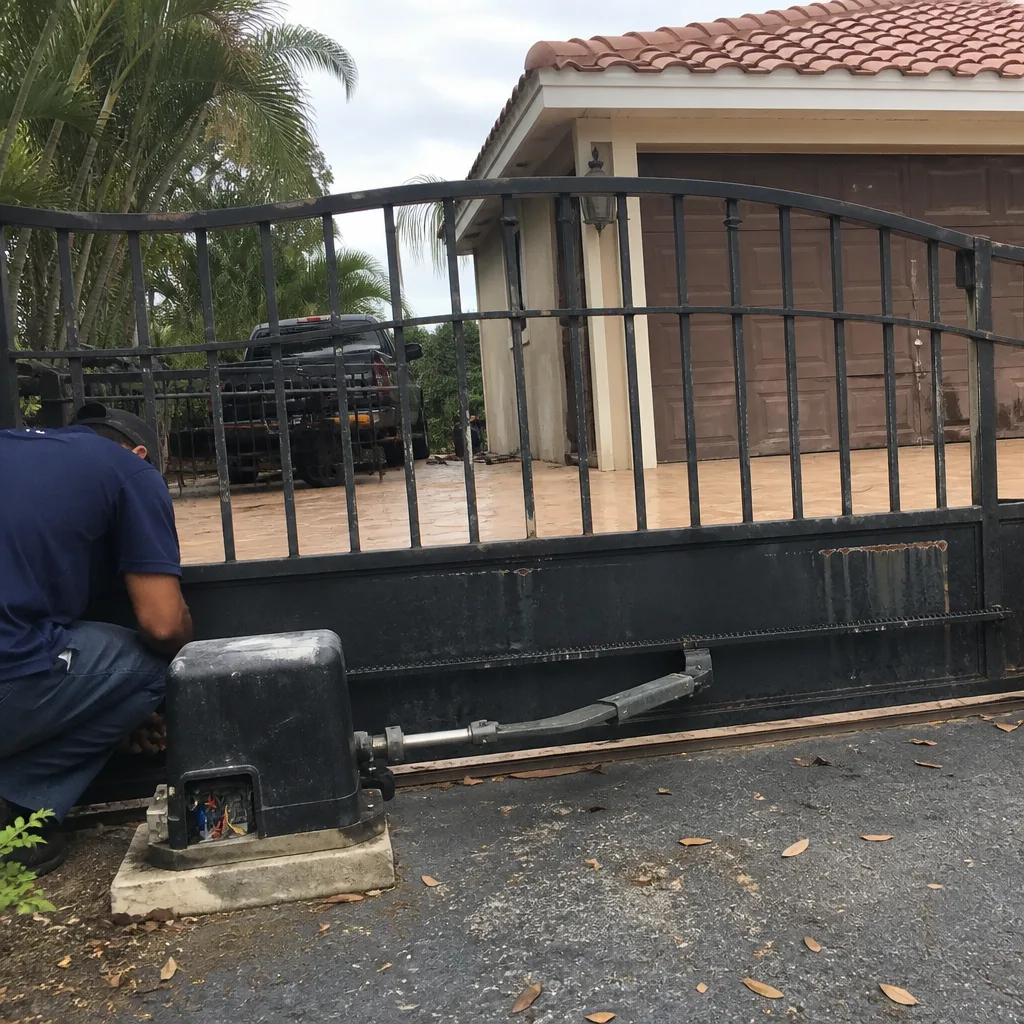 Before
 After
After