
Last updated October 17, 2026
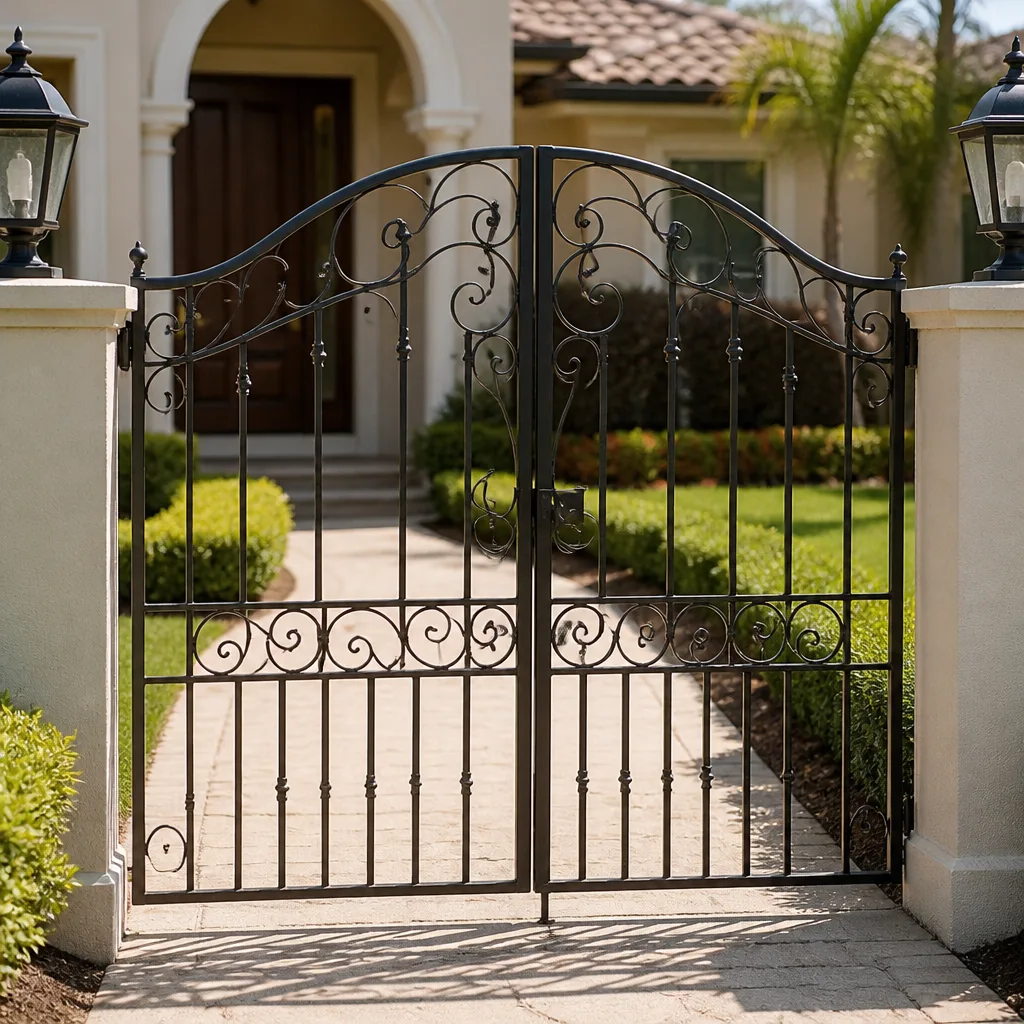 Wrought iron
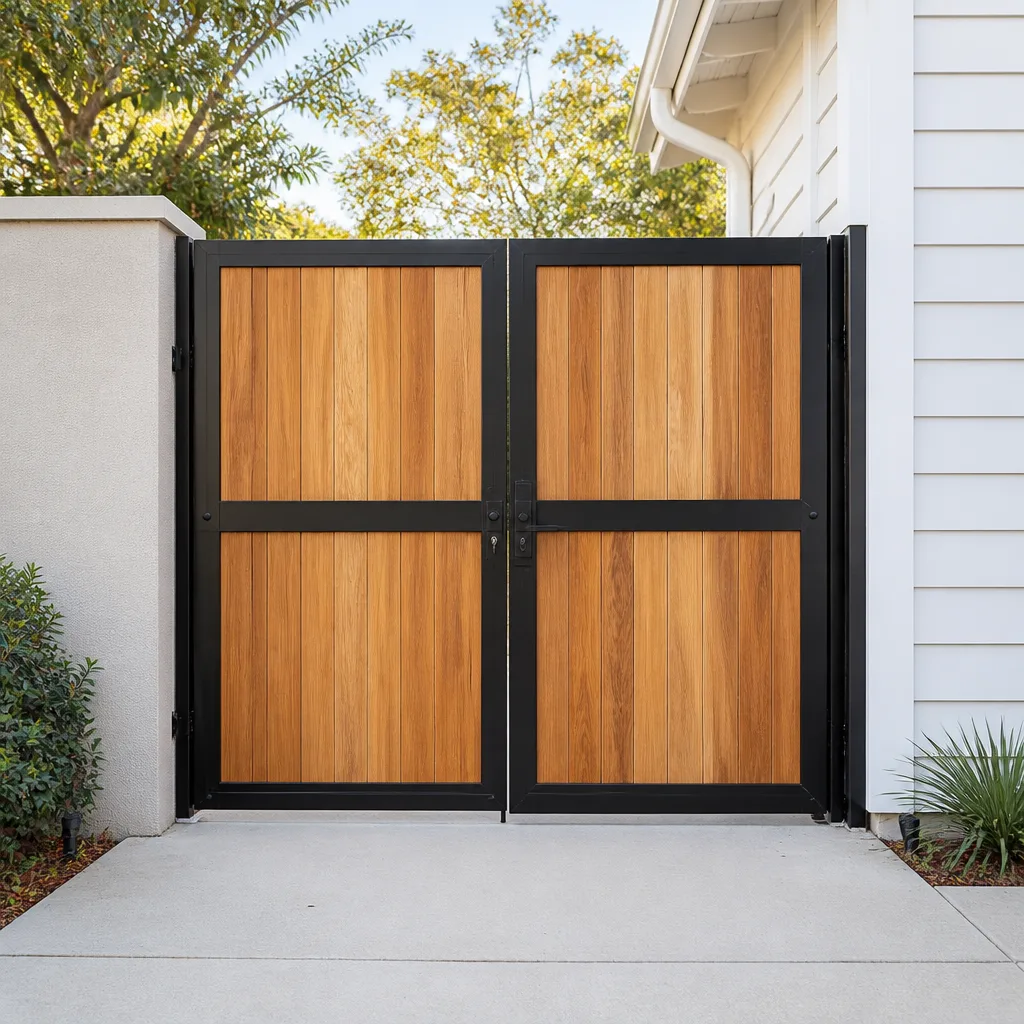 Wood & steel frame
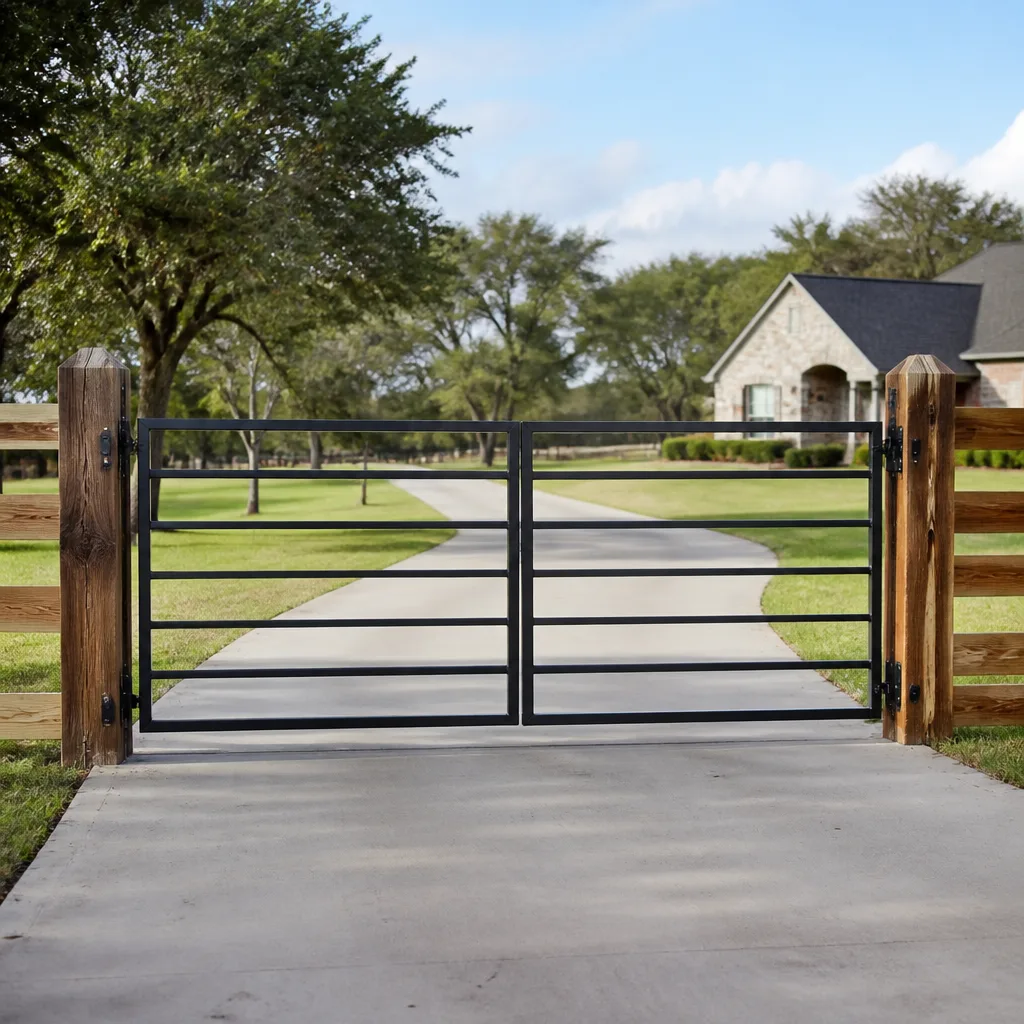 Farm & ranch
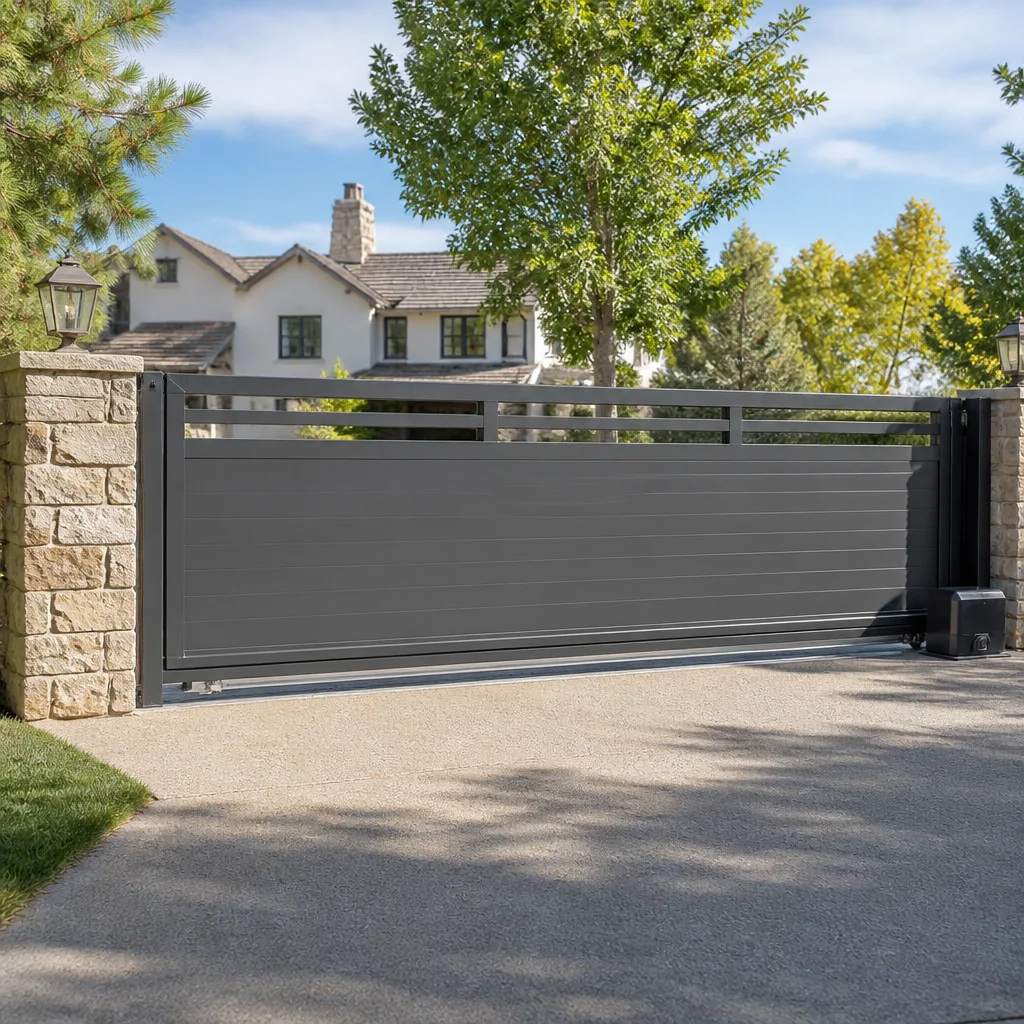 Sliding driveway gates
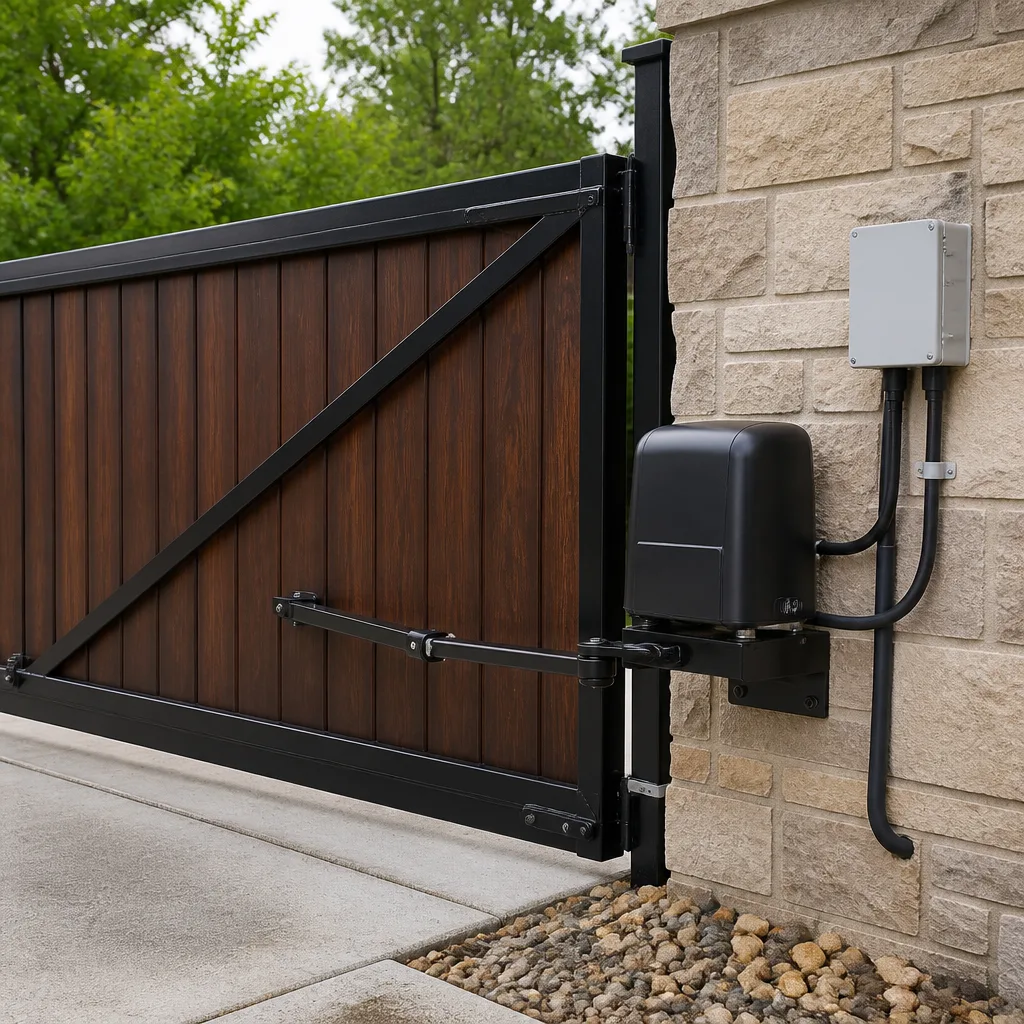 LiftMaster operators
Free on-site gate assessment - hinges, posts, and your LiftMaster or Nice gate operator checked before anything is quoted
The assessment is free and the quote is the invoice.
Get your free estimateGate Repair Maintenance Checklist for West Palm Beach Homeowners
Most gate maintenance checklists are written for Ohio. They don’t mention that a West Palm Beach gate exposed to onshore wind needs its hinges wiped and re-lubricated every eight weeks, not every six months, or that standard WD-40 actually accelerates rust in high-humidity environments. This guide is different. It’s built around the actual coastal calendar of West Palm Beach: the dry, salty months when deposits build up, and the wet, humid months when wood swells and hardware loosens. You’ll find month-by-month task assignments, lubricant guidance by hardware type, a no-tools inspection routine you can do in fifteen minutes, and an honest breakdown of what to handle yourself versus what to leave to a specialist.
Quick Answer
Gate maintenance in West Palm Beach runs on a coastal calendar, not a generic quarterly template. From November through April, your job is removing salt deposits and re-lubricating hinges every eight weeks. From May through October, the priority shifts to drainage, wood swelling, and anchor bolt tension. Most homeowners skip three specific things: latch strike plate alignment, bottom rail clearance, and post anchor bolt tightness. Those three omissions account for roughly 60% of avoidable repair calls we see across West Palm Beach.
Styles & brands we work with
Table of Contents
- Why West Palm Beach Weather Demands a Different Checklist
- The Month-by-Month West Palm Beach Gate Maintenance Calendar
- Lubricant Guide: What to Use on Which Gate Hardware
- The Fifteen-Minute No-Tools Inspection Routine
- The Three Things Homeowners Skip That Cause Most Gate Failures
- Electric Gate Maintenance: What to Check Without Touching a Wire
- Wood Gate Care for West Palm Beach Humidity
- Common Mistakes to Avoid
- When to Call a Professional
- Frequently Asked Questions
Why West Palm Beach Weather Demands a Different Checklist
West Palm Beach sits in a narrow band of the Florida coast where the weather splits the year into two distinct maintenance regimes. November through April is the dry season. Onshore winds carry salt off the Atlantic and deposit it on everything metal: hinges, latches, bolts, and slide tracks. Salt is hygroscopic, meaning it pulls moisture out of humid air and holds it against your gate hardware. That’s the quiet rust engine most generic checklists never mention. A hinge that looks fine in February can be pitted and stiff by March, even though it never saw a drop of rain.
May through October is the wet season. Afternoon thunderstorms arrive with regularity, the water table rises, and the relative humidity sits above 80% for weeks at a time. Wood gates absorb that moisture and swell, sometimes enough to shift a gate off its plumb line by a quarter inch or more. Swelling also changes the clearance at the bottom rail and the alignment at the latch strike plate, which changes the way the gate closes and latches.
The point is simple: seasonal repetition alone won’t protect a gate in West Palm Beach. The specific problems change with the calendar, and your maintenance work should too. A checklist that says “lubricate hinges twice a year” is leaving your gate unprotected for roughly ten months of the year. The next section lays out exactly which tasks belong in which months, tied to what the weather is actually doing here.
The Month-by-Month West Palm Beach Gate Maintenance Calendar
Here is the complete annual calendar, organized by what’s actually happening to your gate in each stretch of the West Palm Beach year. For most of these tasks, fifteen to twenty minutes is realistic. None require anything beyond a rag, a can of the right lubricant, a level, and a flashlight.
November through February: Salt Removal and Lubrication
This is the salt season. Onshore wind from the Atlantic moves continuously across West Palm Beach neighborhoods from the barrier islands inland. Every exposed metal part of your gate is collecting a fine, nearly invisible salt film. If left alone, that film holds humidity against hinges, latch bolts, and slide rollers, which leads directly to pitting, seizure, and premature wear.
- Wipe down all metal hinges, latch assemblies, slide tracks, and rollers with a dry microfiber cloth every eight weeks. Don’t use water; dry wiping removes salt without introducing new moisture.
- After wiping, re-lubricate the pivot points on hinges with a dry PTFE spray or a marine-grade white lithium grease, depending on your hinge style. Section three below covers exactly which lubricant goes where.
- Check the bottom rail clearance. Dry-season shrinkage often increases the gap, which shifts weight onto the latch side and can cause the gate to sag. A quarter-inch to half-inch gap at the bottom rail is the target range for most gates.
- Inspect the post anchor bolts. Dry-season soil in West Palm Beach can pull back slightly from concrete footings, leaving a small gap at the base of the post. Firmly tighten any anchor bolt that turns with hand pressure.
March through April: Transition and Pre-Rain Inspection
March and April are the shoulder months. The dry season is ending, the first thunderstorms are weeks away, and this is the best window for tasks that need a dry surface. Fix anything now, before humidity makes every job harder.
- Test the full latch engagement. Close the gate and push on it laterally. If it shifts more than a quarter inch while latched, the strike plate needs realignment. This single fix prevents sagging and latch failure all summer.
- Lubricate all moving points one more time before the rains start. Use a product that holds up under repeated water exposure, not a dry-season product.
- Walk the gate’s full swing arc. Remove any pavers, stones, or debris that have shifted into the arc since fall.
- If your gate has a drop rod, pull it up and check the ground socket. Debris and sand from dry-season wind accumulates in sockets and prevents the rod from fully seating, which is what keeps the gate steady in wind.
May through September: Drainage, Swelling, and Post Shifting
Afternoon thunderstorms are now a near-daily occurrence. Water pools at the base of posts, wood absorbs ambient humidity, and hardware that was tight in April often loosens by July. Your focus shifts from lubrication to structural checks.
- Check the ground around both gate posts for standing water after heavy rain. If water pools against the base of a post for more than an hour after a storm, regrade the soil so water flows away. Persistent pooling softens footings and shifts posts.
- Inspect the bottom rail clearance weekly during peak humidity. If the gate starts dragging or scraping the ground, the wood or metal has expanded or the post has shifted. Don’t force it; a scraping gate puts load on the hinge welds and latch assembly.
- Tighten post anchor bolts and hinge bolts once a month. High humidity causes metal to expand and contract, which loosens bolts gradually over the season.
- Clean out the slide track and roller channels after storms. Wind-driven debris, leaves, and sand collect in tracks and act as grinding paste on rollers, which accelerates track wear that’s expensive to repair.
- Wipe down exposed metal after week-long stretches of rain. The salt from the dry season is now dissolved in rainwater and sitting on your hardware. A quick dry wipe prevents the corrosion cycle from restarting.
October: End-of-Season Reset
October is the calm before the dry-season salt returns. It’s the right month for one thorough end-to-end pass, including the tasks most people defer.
- Complete a full inspection of the hinge welds and all connection points with a flashlight. Look for hairline cracks, rust blooms, or powder coating failure.
- Test the latch engagement and strike plate alignment one final time before the dry season.
- Lubricate all moving parts with the dry-season lubricant of choice, then wipe away any excess. Excess lubricant collects salt during the dry season like a magnet.
- Take and file away a photo of the gate’s current alignment and clearance. Next spring, you’ll have a baseline to compare against.
Lubricant Guide: What to Use on Which Gate Hardware
The wrong lubricant in a West Palm Beach gate will do more damage than no lubricant at all. Standard WD-40 is a solvent and water displacer, not a true lubricant. In high-humidity environments, it strips away whatever protective film is present and then evaporates, leaving the metal exposed to the exact wet air that accelerates rust. For a gate in West Palm Beach, choosing the right product means matching it to the hardware type and the season.
Here is what we use and recommend for the brands common across West Palm Beach gates, including Mighty Mule, LiftMaster, and FAAC hardware.
- Dry PTFE spray is the workhorse for residential gate hinges and latch mechanisms during the dry season. It goes on wet, dries to a film, and doesn’t attract sand or salt. For barrels and pivot points, spray, cycle the hinge several times, then wipe the exterior. Reapply every eight weeks from November through April.
- Marine-grade white lithium grease belongs on slide tracks and roller channels. It holds up under repeated exposure to water and won’t wash away in the first thunderstorm of May. Apply lightly, work the gate through its full travel, then wipe the rail clean. If the track is aluminum, use the marine-grade version specifically formulated for aluminum to avoid pitting.
- Silicone spray without petroleum distillates is the right choice for latch assemblies, drop rods, and any moving part made from nylon or other plastics. Petroleum distillates can degrade nylon cam assemblies inside electric operator arms, especially on Mighty Mule and FAAC units. Silicone lubricates without that risk.
- Food-grade silicone or white lithium is the right pick if your gate is near a vegetable garden or if kids and pets regularly touch the lower gate hardware. It’s a small difference that protects a household, not just a gate.
- Never use penetrating oil as a long-term lubricant. Penetrating oil is for freeing stuck parts, not keeping them moving. It’s too thin to last and in the West Palm Beach humidity it washes off within days.
One final note: every lubrication job ends the same way in a coastal climate. Wipe off the excess. A visible bead of oil or grease is a collection point for salt and sand, and the resulting grinding paste will wear out your hardware faster than no lubricant would have.
The Fifteen-Minute No-Tools Inspection Routine
This is the inspection routine we recommend to West Palm Beach homeowners as a monthly habit, though eight weeks is a realistic minimum during the salt season. You need a level, a flashlight, and a few minutes of daylight. Nothing else.
Step 1: The Plumb Check
Place the level vertically against the gate post, both on the hinge side and the latch side. If the bubble sits outside the center lines, the post is out of plumb. A post that’s more than an eighth of an inch out of plumb over a four-foot level is worth investigating. Shifted posts are usually caused by water or soil movement, not hardware failure, and they should be corrected before the gate’s weight makes the problem worse.
Step 2: The Bottom Rail Clearance
Measure the gap between the bottom rail and the ground at both ends of the gate. The two measurements should be within a quarter inch of each other, and the total gap should be between a quarter inch and half an inch. More than half an inch means the gate is likely sagging away from the hinge side; less than a quarter inch means the gate is likely dragging or will drag soon.
Step 3: The Latch Engagement Check
Close the gate slowly and watch where the latch bolt enters the strike plate. It should enter cleanly and seat fully without scraping the top or side of the strike opening. If it catches or requires a push to fully engage, the strike plate needs realignment. This is the most commonly skipped check in West Palm Beach, and misaligned strike plates are the cause of a large share of avoidable latch failures.
Step 4: The Drop Rod and Ground Socket
If your gate has a drop rod, raise it and look into the ground socket with the flashlight. Clean out leaves, sand, and any shell fragments that have collected. The rod should seat fully and hold without wobble. A drop rod that doesn’t fully seat transfers wind loads to the hinges and latch, which accelerates wear on those parts.
Step 5: The Hinge Barrel Inspection
Open the gate fully and run the flashlight along the hinge barrels and weld points. Look for hairline cracks, rust blooms, or areas where the powder coating has flaked away. Surface rust is maintenance; cracked welds are a call to a specialist.
Step 6: The Post Anchor Check
Grasp the gate post at the top and pull firmly toward you and then away. There should be no movement at the base. If the post shifts, the anchor bolts or the footing itself are the problem. This is a safety issue, not a maintenance issue, and it should be evaluated by a Gate Repair in West Palm Beach specialist before the gate is used heavily again.
The Three Things Homeowners Skip That Cause Most Gate Failures
In our experience across West Palm Beach, the same three skipped tasks show up on repair tickets month after month. None of them are expensive to fix when they’re caught early. All of them are expensive to fix when they’re not.
1. Latch Strike Plate Alignment
Most homeowners think a gate problem is a hinge problem. But a gate that sags, sticks, or fails to latch is usually telling you something about the strike plate. When the latch bolt doesn’t seat cleanly, the gate’s weight loads unevenly across the latch side, which slowly twists the gate frame and accelerates hinge wear. Checking strike plate alignment monthly and addressing small misalignments quickly prevents the slow cascade that ends with a latch replacement and a frame straightening instead of a five-minute adjustment.
2. Bottom Rail Clearance
A gate that drags on the ground is wearing itself out from the bottom up. Dragging puts constant side load on the hinges and compression load on the latch assembly. In West Palm Beach, this is a seasonal problem: gates that clear the ground in January often scrape by July because the ground beneath them has absorbed months of rain and shifted. Check clearance twice a month during the wet season, not once a year.
3. Post Anchor Bolt Tightness
Post anchor bolts hold the gate post to its footing. When they loosen, the post starts to move, and the gate loses its plumb line. From there, every other part of the gate works harder to compensate. Loose anchor bolts are silent; they don’t squeak or scrape. The only way to catch them is to check them deliberately, which is why they’re skipped so often and why they appear in so many gate repair calls across West Palm Beach.
Electric Gate Maintenance: What to Check Without Touching a Wire
Electric gates in West Palm Beach take the same weather beating as manual gates, plus the added complication of electronics, motors, and safety sensors. The good news is that the highest-value maintenance tasks on an electric gate don’t require touching any wiring at all.
Keep the Operator Clean and Dry
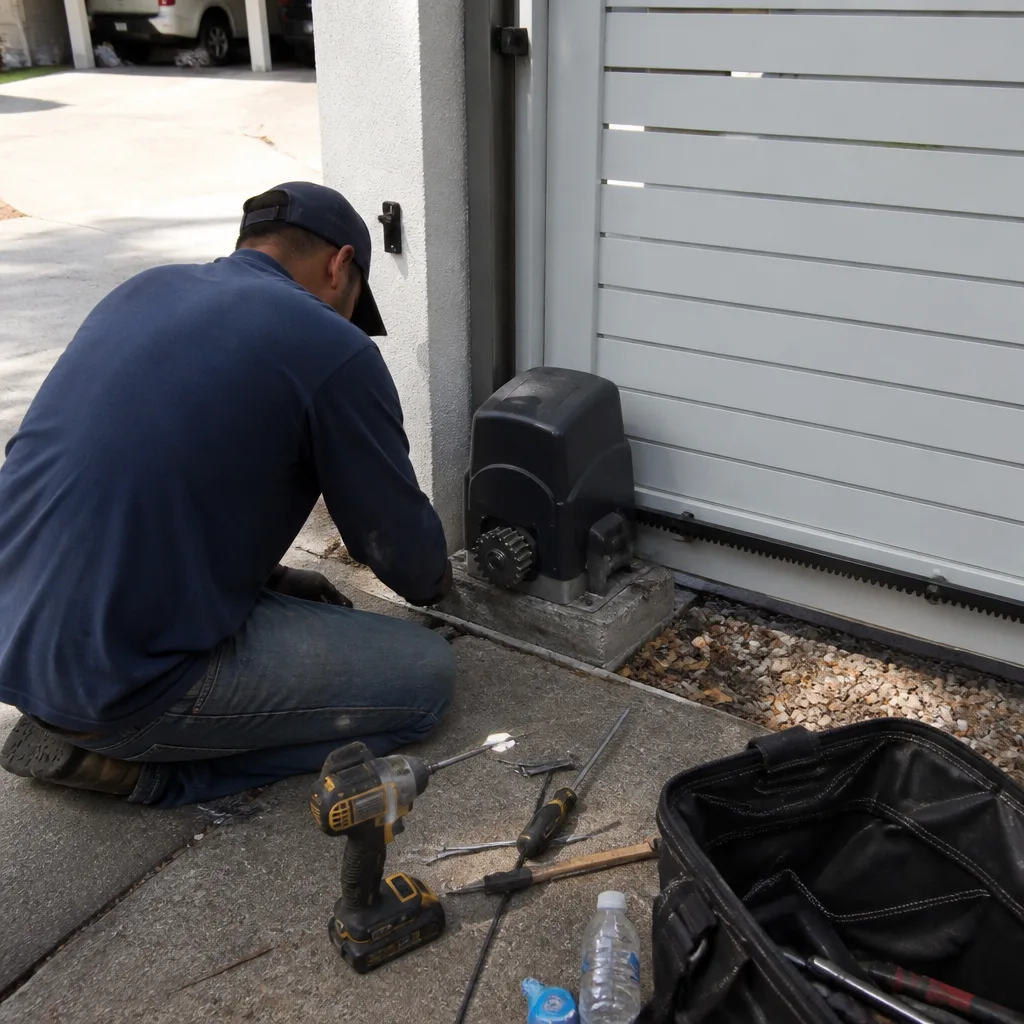
Most electric gate operator failures come down to water intrusion or debris buildup around the motor housing. During the wet season, check that water isn’t pooling around the operator’s base or running down the conduit into the housing. Keep the housing closed and sealed; an open cover during a thunderstorm is the starting point for expensive circuit board corrosion. If the housing has been opened for any reason, make sure the gasket is seated correctly before you close it.
Check the Safety Edges and Photo Eyes
Safety edges and photo eyes exist to prevent accidents, but they only work if they can see and feel. Wipe photo eye lenses with a dry cloth after storms; wind-driven salt and rain leave a film that reduces sensor range. Check that safety edges are not torn, cracked, or loose at any point along their length. In West Palm Beach, UV exposure from the Florida sun degrades rubber safety edges faster than you’d expect, even during the winter months.
Test the Manual Release
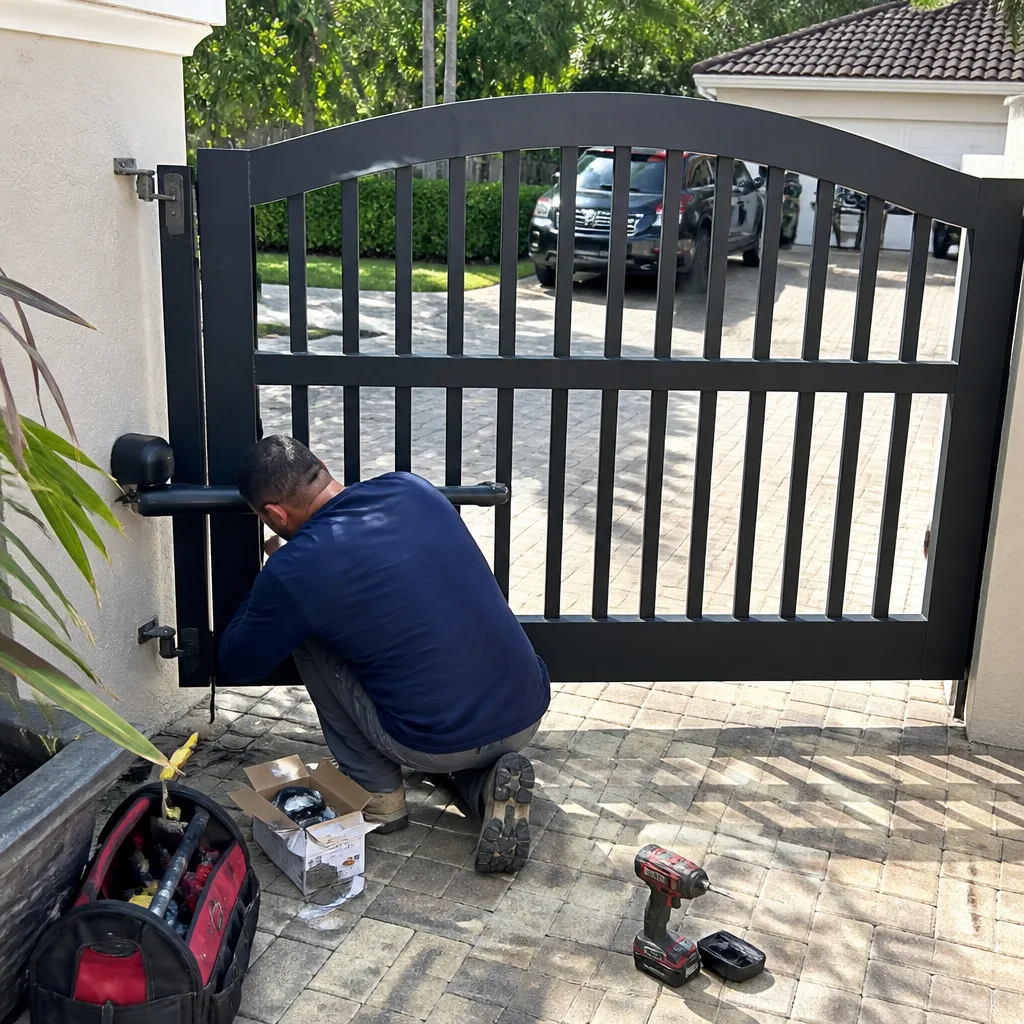
Every electric gate operator, from Mighty Mule to LiftMaster to FAAC, has a manual release mechanism that disconnects the gate from the motor, allowing hand operation during a power outage or motor failure. Test it quarterly: pull the release, open the gate by hand, close it, and re-engage. If the release is stiff or binds, clean and lubricate the mechanism with the right product. A gate that can’t be opened manually during a storm outage is a bigger problem than a gate that won’t open electrically.
Watch the Travel Speed and Force Settings
Listen to the gate during its open and close cycle. If it accelerates suddenly, slows unevenly, or reverses without cause, the travel speed or force settings may have drifted, or a sensor may be dirty. These are the early symptoms of operator wear. Most electric gate repairs in West Palm Beach start with a complaint that the gate “just started acting strange one day.” The strange behavior usually started months earlier and was noticed as a small hesitation or an unexplained reversal. When you notice those small changes, have an Electric Gate Repair in West Palm Beach technician evaluate the operator before the behavior becomes a failure.
Wood Gate Care for West Palm Beach Humidity
Wood gates in West Palm Beach live in a constant cycle of swelling and shrinking. The humidity swings are larger here than almost anywhere else in the country, and the wood responds accordingly. That movement is normal, but it does demand a few specific habits.
Finish Protection Comes First
The single most important wood gate maintenance task in West Palm Beach is keeping a sound finish on the wood. Bare wood in this climate absorbs water quickly and releases it slowly, which accelerates warping, cracking, and rot. Check the gate’s finish every spring. If water no longer beads on the surface, the finish has failed and it’s time to refinish. A quality exterior-grade sealant or marine varnish applied once a year is enough for most gates; don’t let it go longer in this humidity.
Watch the Gate-to-Post Gap
Wood expands across its width more than along its length. That means the gap between the latch edge of the gate and the post changes through the year. If the gap closes completely during the wet season, the gate will bind and the latch will scrape. A minimum gap of a quarter inch at the latch edge is the right target for most West Palm Beach wood gates. If the gate binds during summer, don’t plane the edge; correct the clearance issue at the hinge side or post instead, or you’ll have a different problem in January when the wood shrinks back.
Bottom Rail Protection
The bottom rail of a wood gate is the first component to rot in West Palm Beach because it sits closest to rain splash and rising humidity. Check the bottom rail for softness every fall and spring. Press the tip of a screwdriver into the wood in an inconspicuous spot; if it sinks more than a sixteenth of an inch, rot is present under the surface. Catch it early and you can repair a section; catch it late and you’re replacing the entire rail or the entire gate.
Common Mistakes to Avoid
- Using WD-40 as a gate lubricant. In West Palm Beach humidity, WD-40’s solvent base strips protective film and evaporates, leaving hardware exposed to the exact wet air that causes corrosion. Use a dedicated dry PTFE spray or marine-grade grease instead.
- Lubricating without wiping first. Applying fresh lubricant over accumulated salt and sand creates a grinding paste. Always wipe hardware clean with a dry cloth before lubricating. This is the most common mistake we see in West Palm Beach, where dry-season salt builds up invisibly.
- Ignoring bottom rail clearance. A gate that scrapes the ground is wearing out its hinges, latch, and frame all at once. Check clearance monthly during the wet season and correct small issues before they become gate frame problems.
- Painting over hinges and latch parts without removing them. Paint applied over moving parts seizes them. If you repaint the gate, remove the hardware first or mask it carefully.
- Skipping the post anchor check. Loose anchor bolts are silent and invisible until the post has already shifted. The fix is simple when caught early and expensive when caught late.
- Tightening bolts without checking alignment first. Tightening a hinge bolt on a gate that’s already out of alignment locks in the misalignment. Check plumb and clearance before you tighten anything.
- Treating every gate the same way. A slide gate on an aluminum track has different needs than a swing gate on barrel hinges. Match the maintenance to the gate type and the hardware on it, not to a generic template.
When to Call a Professional
Some problems move beyond maintenance and into repair territory. Here are the specific signs that a West Palm Beach gate needs a specialist’s attention rather than another round of the checklist.
- The post moves when you pull on it. A shifting post means the footing or anchor bolts have failed, and continued use risks a full gate collapse.
- Hairline cracks in hinge welds or around the latch plate. Cracks in metal don’t heal and don’t stabilize. They spread, and the failure point is unpredictable.
- The gate has dropped more than half an inch from its original position. This usually means the hinge or post is failing, not just the alignment.
- The electric operator makes a grinding or clicking sound during travel. That’s gear or motor wear, not a lubrication issue.
- The gate reverses unexpectedly or fails to reverse when the safety edge is pressed. Safety sensor problems are immediate repair items on an electric gate.
When you hit one of those signs, stop the checklist and make the call. Latch and Post Gate Repair West Palm Beach home service covers the full range of gate, installation, and electric gate issues in West Palm Beach, with free estimates and written pricing before any work begins. Call (728) 203-0817 and you’ll reach a live person, day or night.
Frequently Asked Questions
Every eight weeks during the dry season, which runs November through April. During the wet season from May through October, you can extend that to every twelve weeks, but you should wipe hinges dry after heavy rainstorms that follow long dry stretches, since that’s when salt deposits reactivate and accelerate corrosion.
Use a dry PTFE spray on hinge barrels and latch mechanisms during the dry season, marine-grade white lithium grease on slide tracks and roller channels, and silicone spray without petroleum distillates on any nylon or plastic parts. Never use WD-40 as a long-term lubricant in this climate.
High summer humidity causes wood gates to swell, which narrows the gap at the latch edge and against the post. If the gate sticks during the wet season, it’s usually a clearance or alignment issue, not a hardware failure. Correct the hinge-side clearance rather than planing the gate edge, since the wood will shrink again during the dry season.
In the West Palm Beach area, common gate repairs range from about $95 to $250 for latch and hinge adjustments, $150 to $400 for post realignment and anchor work, and $200 to $600 for electric operator repairs depending on the part and brand. Every Latch and Post Gate Repair job comes with a written price before any work starts, so you’ll always know the exact number before we touch the gate.
Most electric gate maintenance that involves cleaning, wiping, and visual inspection is safely DIY. Anything that involves removing the operator housing, touching wiring, adjusting force settings, or replacing sensors should be left to a trained technician. Electric gates carry enough voltage and enough stored mechanical force to cause serious injury, and the safety edges and photo eyes are life-safety devices that must be adjusted correctly. For those tasks, call an electric gate specialist in West Palm Beach rather than attempting a fix.
Latch strike plate alignment. Most people check hinges and think they’ve covered the gate, but misaligned strike plates cause more avoidable gate repairs in West Palm Beach than any other single issue. Check the strike plate monthly and call for an adjustment the moment the latch starts catching or scraping. We offer Gate Installation in West Palm Beach and repair services at Latch and Post with same-week scheduling, so an alignment concern never has to linger.
The Bottom Line
West Palm Beach gates live in a climate that punishes neglect on a faster cycle than most of the country. The salt months demand eight-week lubrication and dry wiping. The wet months demand drainage checks, anchor bolt tightening, and bottom rail clearance monitoring. The three tasks that matter most are the unglamorous ones: strike plate alignment, bottom rail clearance, and post anchor tightness. Fifteen minutes a month with a level and a flashlight will prevent most of the electric gate repair and gate repair calls we handle across West Palm Beach. When the problem goes beyond maintenance, Latch and Post Gate Repair West Palm Beach is the Latch and Post Gate Repair West Palm Beach home for West Palm Beach homeowners who want a written price, a clean workspace, and a gate that holds.
Written by Cody Beckman, Owner at Latch and Post Gate Repair West Palm Beach, serving West Palm Beach since 2009.
See the difference
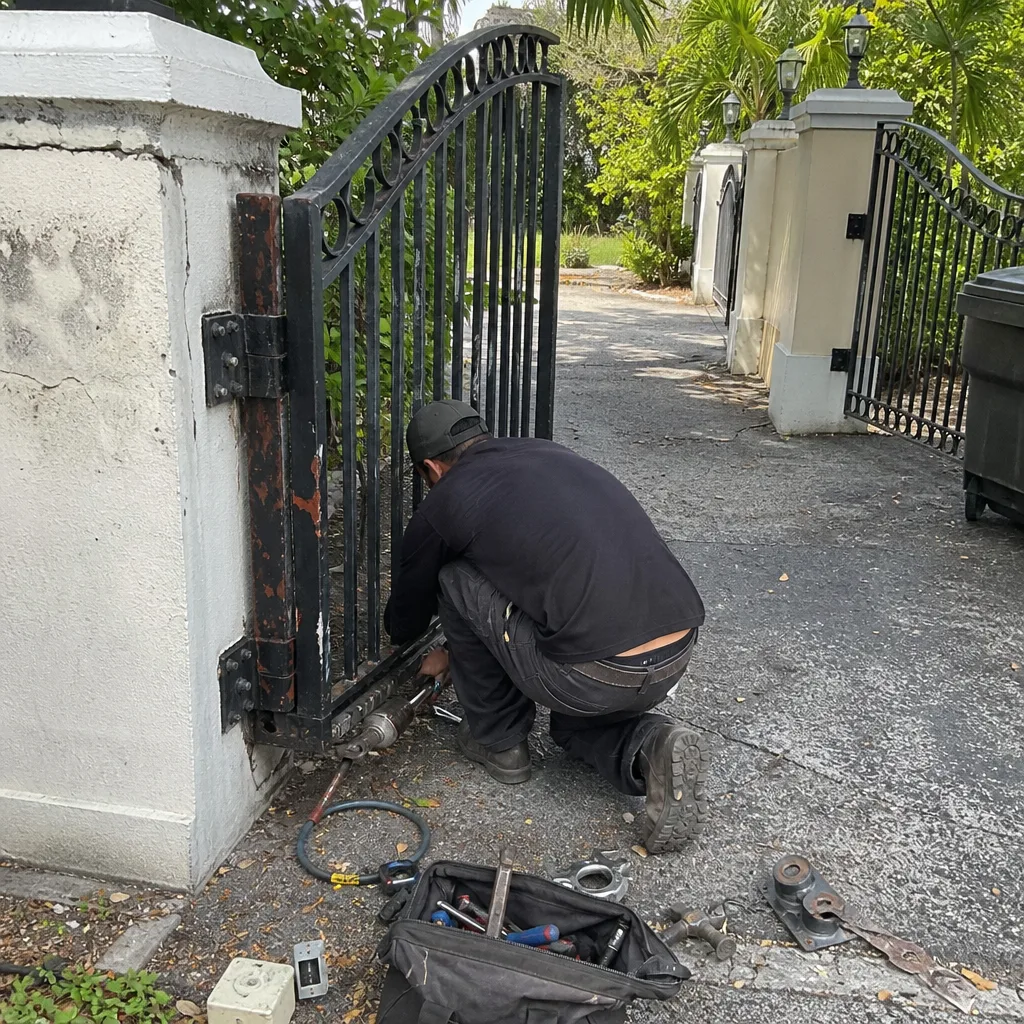 Before
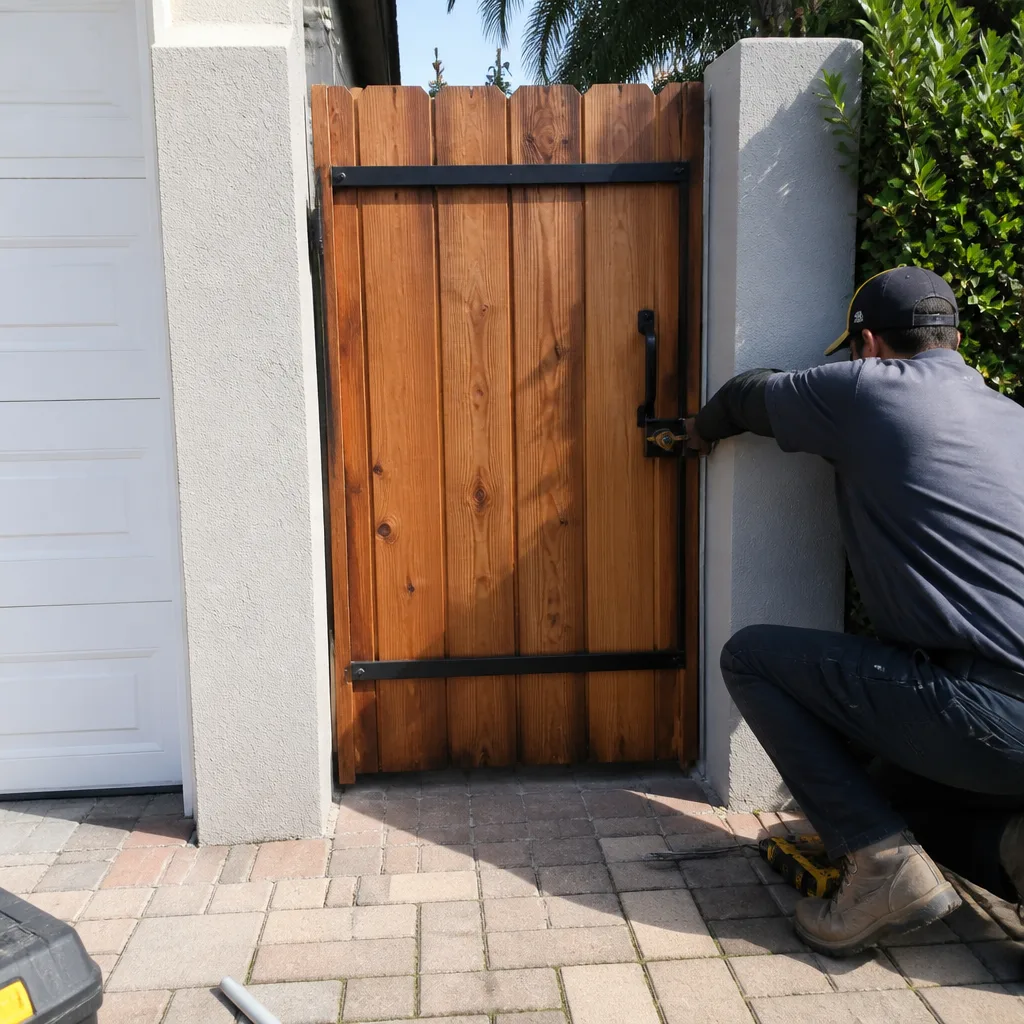 After
After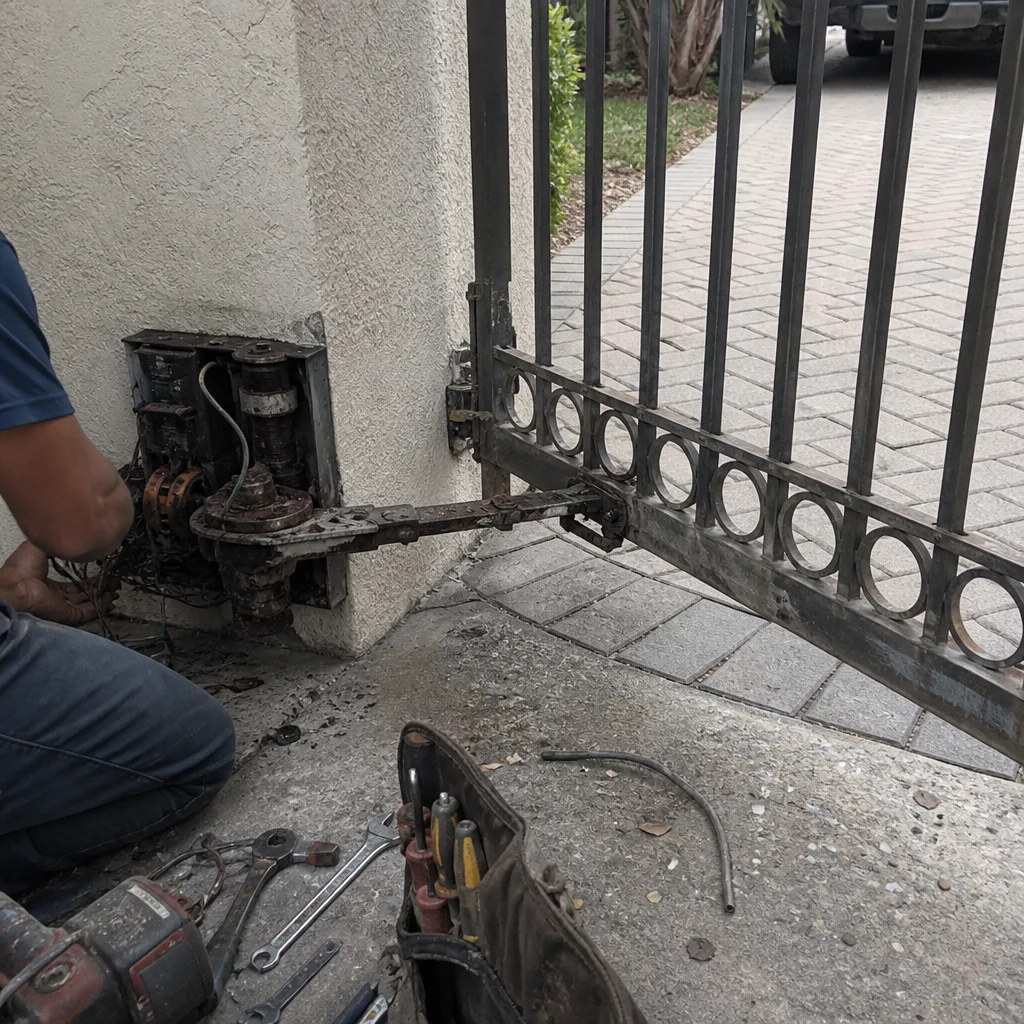 Before
 After
After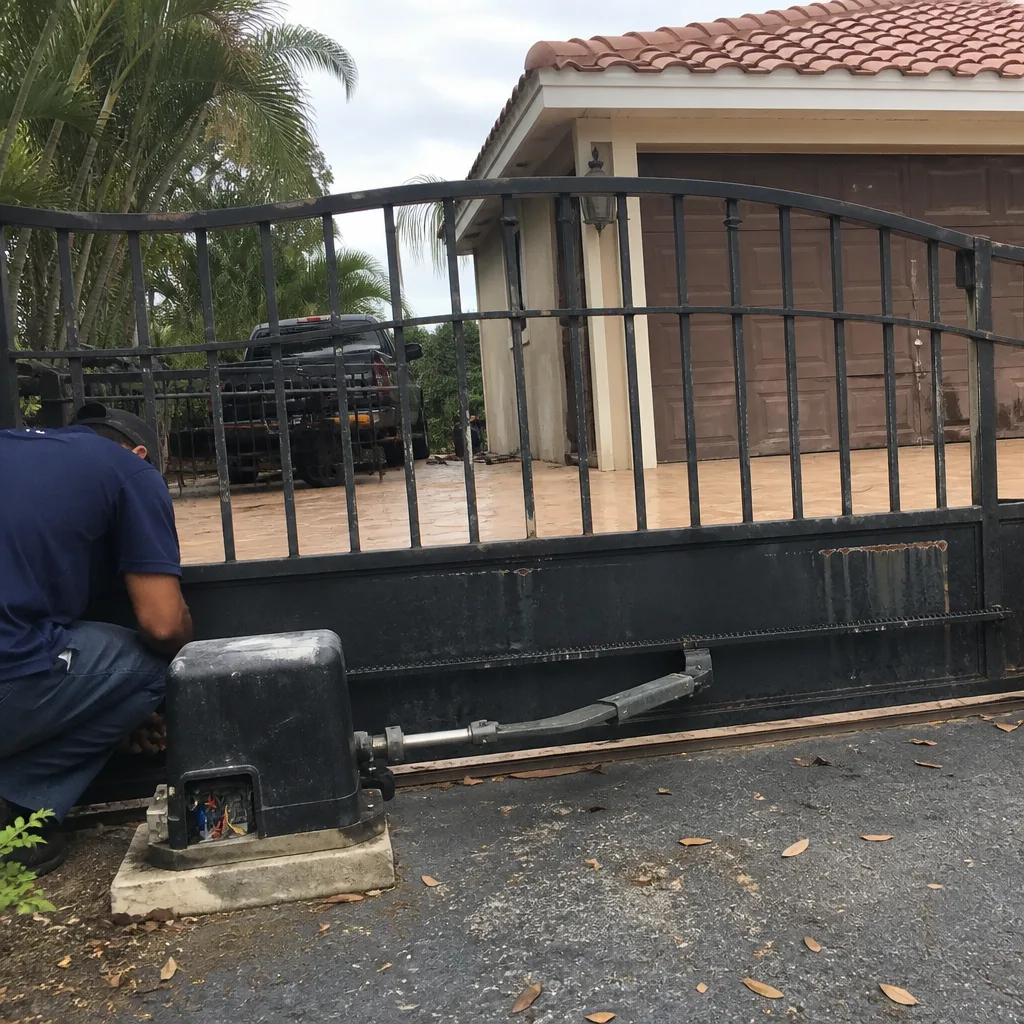 Before
 After
After